

The 7 Most Common Roof Leaks (What Causes Them & How to Fix Each One)
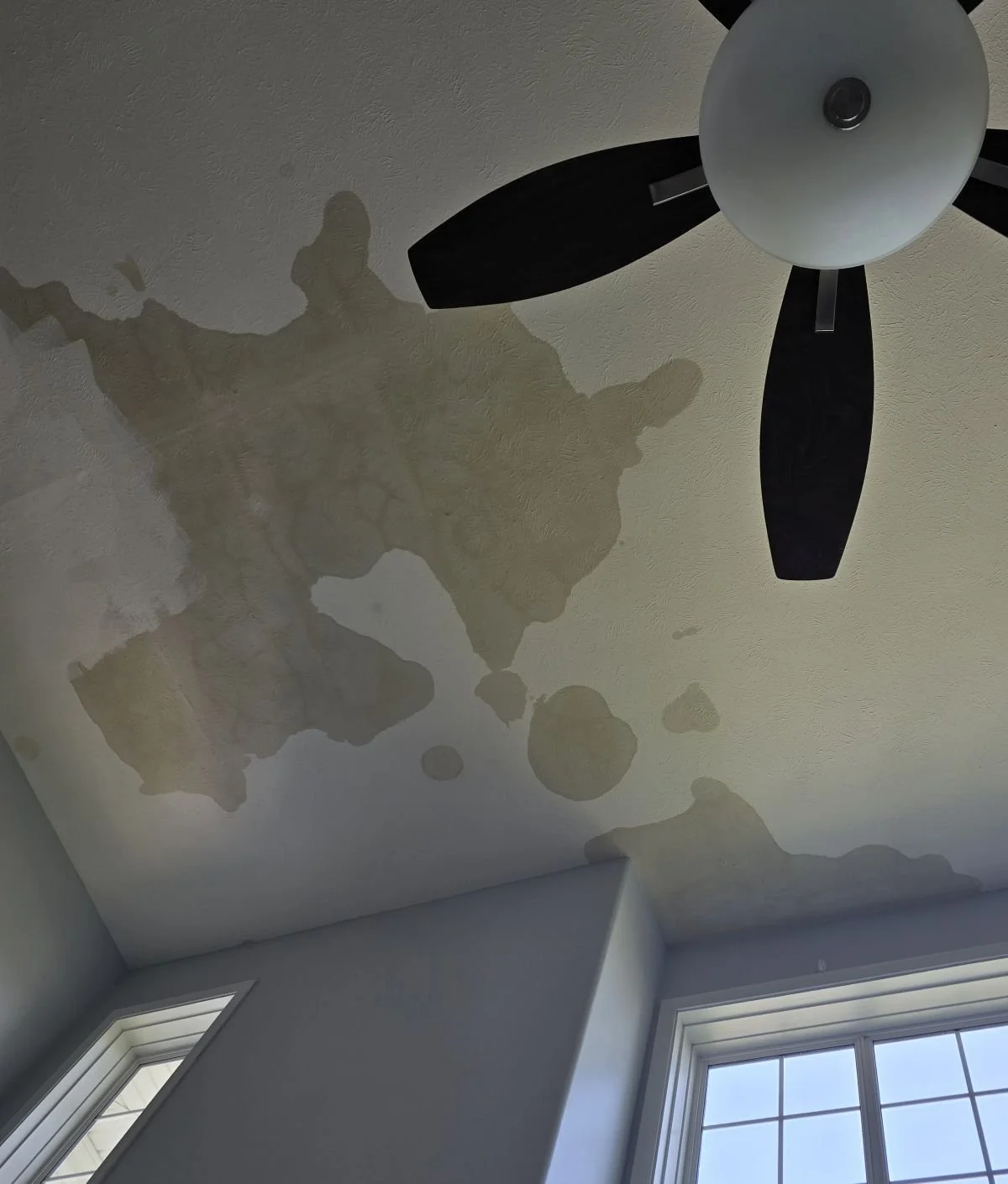
Large ceiling water stains caused by a roof leak. Interior damage like this is often the first visible sign homeowners notice after water has been entering the attic for some time.
Most roof leaks are caused by flashing failures, aging components, or storm damage — and many of them can be repaired if caught early.
A roof leak is one of those problems that almost never announces itself at a convenient time. By the time you notice a stain on your ceiling or water dripping into a room, the damage has usually been building for a while.
The good news is, most leaks come from the same handful of spots. After doing hundreds of roof inspections across Omaha, Papillion, Bellevue, and the surrounding suburbs, I can tell you that the same problem areas show up time and time again. These issues can be found on almost any roof, regardless of the roof’s age or the neighborhood.
Here are the 7 most common sources of roof leaks I find, why they happen, and what you should do if you're dealing with one.
1. Pipe Boot Failures
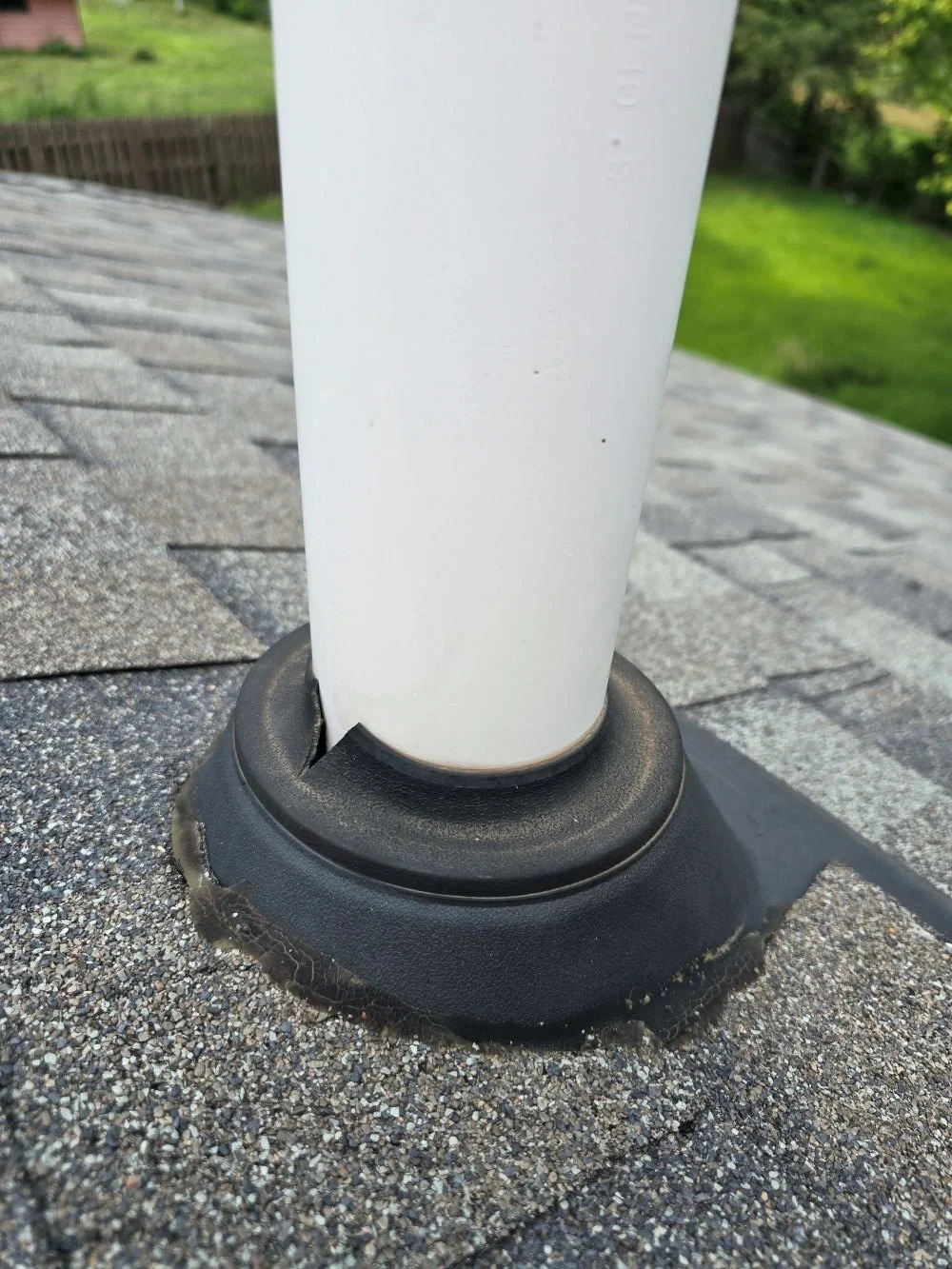
Cracked rubber pipe boot flashing around a plumbing vent pipe — one of the most common causes of roof leaks on asphalt shingle roofs in Omaha homes.
Pipe boots, (also called pipe collars or pipe flashings) are the rubber and metal boots that seal around the plumbing vent pipes sticking up through your roof. They're one of the single most common sources of leaks I find on Omaha homes.
Why they fail: The rubber gasket on a pipe boot has a lifespan of roughly 10–15 years. Nebraska's freeze-thaw cycles and summer heat accelerate that deterioration. Once the rubber cracks or pulls away from the pipe, water channels straight down into your attic.
What to do: This is a relatively straightforward repair. A new pipe boot can usually be installed in under an hour. Often, the rubber seal itself is the only part that’s damaged, meaning the boot can sometimes be repaired without replacing the entire assembly. It's not something to ignore or patch with caulk. If your roof is 10+ years old and you haven't had your pipe boots inspected, it's worth taking the time to inspect.
2. Chimney Flashing Leaks
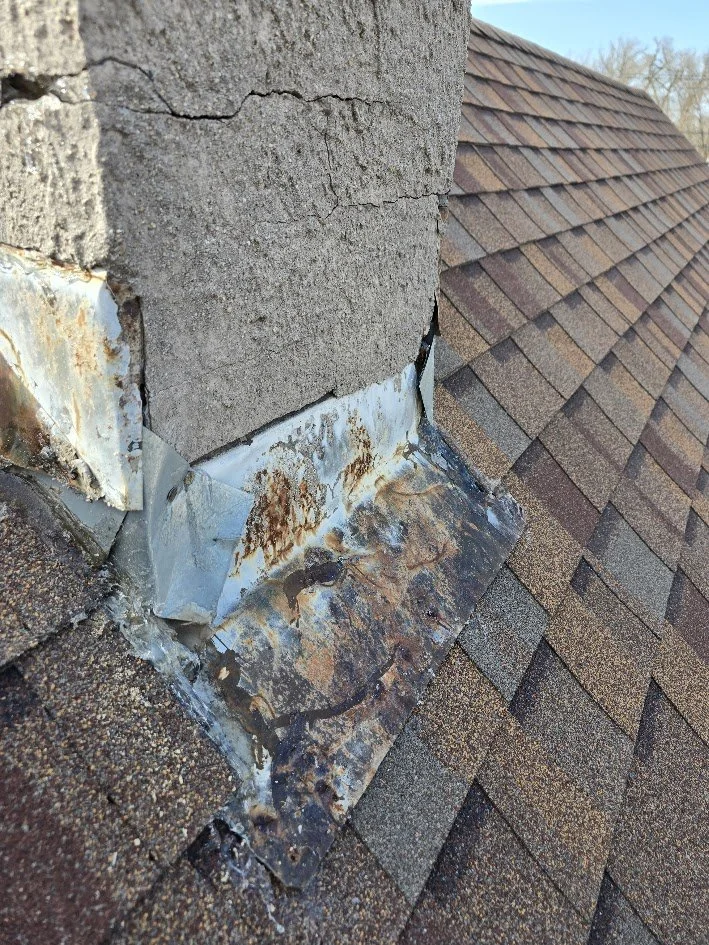
Chimney flashing where the roof meets the chimney. Failing flashing or cracked sealant in this area is a frequent source of roof leaks on homes in the Omaha area.
Chimney flashing is the system of metal pieces that seals the gap between your chimney and the roof surface. There's a lot going on here with step flashing, counter flashing, and sometimes a saddle or cricket behind the chimney. If any one of those components fail, fixing it becomes a priority.
Why it fails: Chimneys are large, rigid structures sitting on a foundation that moves independently from the house. Over time, that movement works the flashing loose. Sealant cracks, metal corrodes, and gaps open up. A wide chimney without a saddle behind it is especially prone to collecting water and debris.
What to do: Chimney flashing repair isn't a caulk-it-and-call-it-done job. If it's failing, it needs to be properly re-flashed. I've seen plenty of homes in the Omaha metro where someone tried to seal a chimney leak with roofing tar, which just delays the problem and can make a proper repair harder down the road.
3. Improperly Installed Valleys
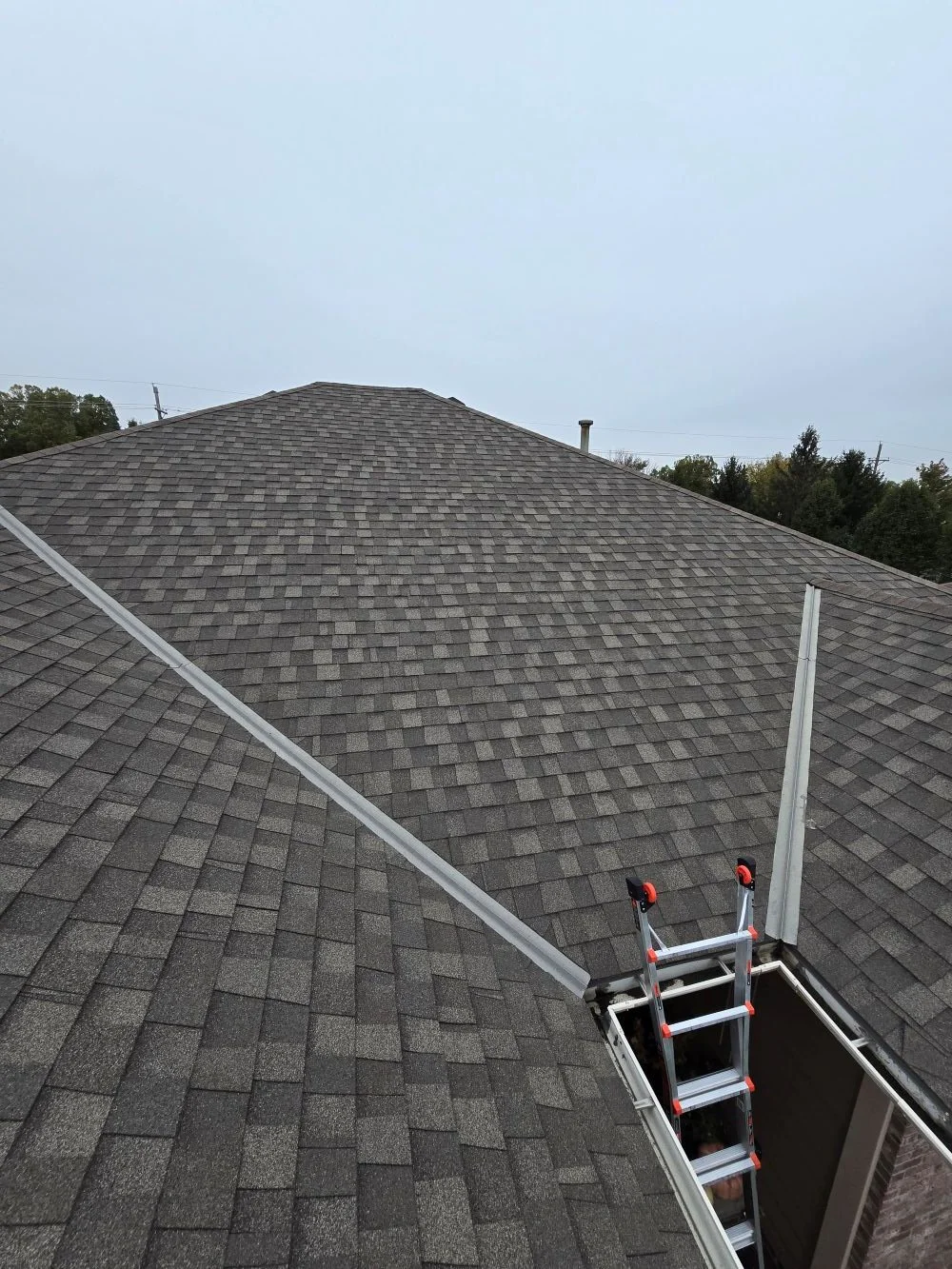
Roof valley where two roof slopes meet. Valleys carry large volumes of water and can leak if shingles are cut too close to the center or flashing is installed incorrectly.
Roof valleys are where two sloping sections of roof meet and form a V-shaped channel. They carry a significant volume of water, especially during a heavy Nebraska rain or when snow is melting.
Why they fail: The most common issue I see is shingles that were cut too close to the center of the valley, leaving insufficient coverage. On older roofs, valley flashing can also rust or pull away. In winter, valleys are prime locations for ice dams — the freeze-thaw cycle in Omaha creates real problems for valleys that weren't installed with proper underlayment.
What to do: A leaking valley often can't be spot-patched effectively. It usually requires re-doing the valley correctly and can sometimes involve replacing the entire slope that connects to the valley in order to properly tie in the new shingles. If you're seeing staining on interior walls or ceilings near a valley line, get a roofer out to take a look before the next big rain.
4. Missing or Damaged Shingles
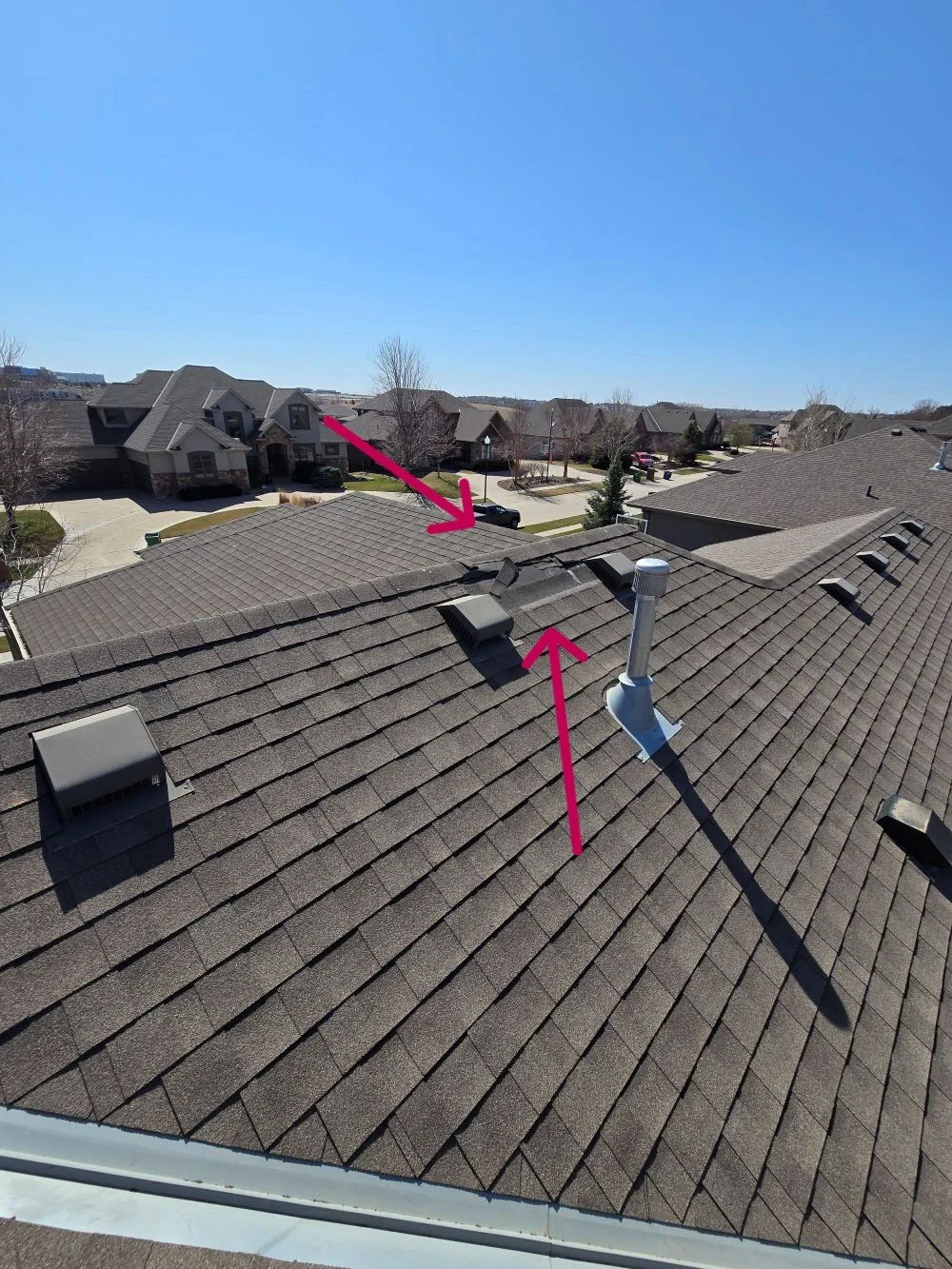
Wind-damaged asphalt shingles missing from a roof after a Nebraska storm, exposing the underlayment and creating a pathway for water to enter the home.
This one is the most visible, yet often the most overlooked, because some homeowners assume a few missing shingles are a minor issue. Shingles are your roof's first line of defense, and once that layer is compromised, water gets in.
Why it happens: High winds are the biggest culprit here in Omaha. We regularly see serious straight-line wind events that can lift improperly nailed or aging shingles right off the deck. Hail damage is subtler; it doesn't always remove shingles, but it bruises the surface and accelerates deterioration, which leads to leaks over time.
What to do: After any major wind or hail event, do a visual inspection from the ground. You don't need to get on the roof yourself — just look for obvious gaps, lifted edges, or shingles in your yard. If you see something, call a roofer a when you can. A small repair today is a lot cheaper than replacing damaged decking or insulation down the road.
5. Skylight Leaks
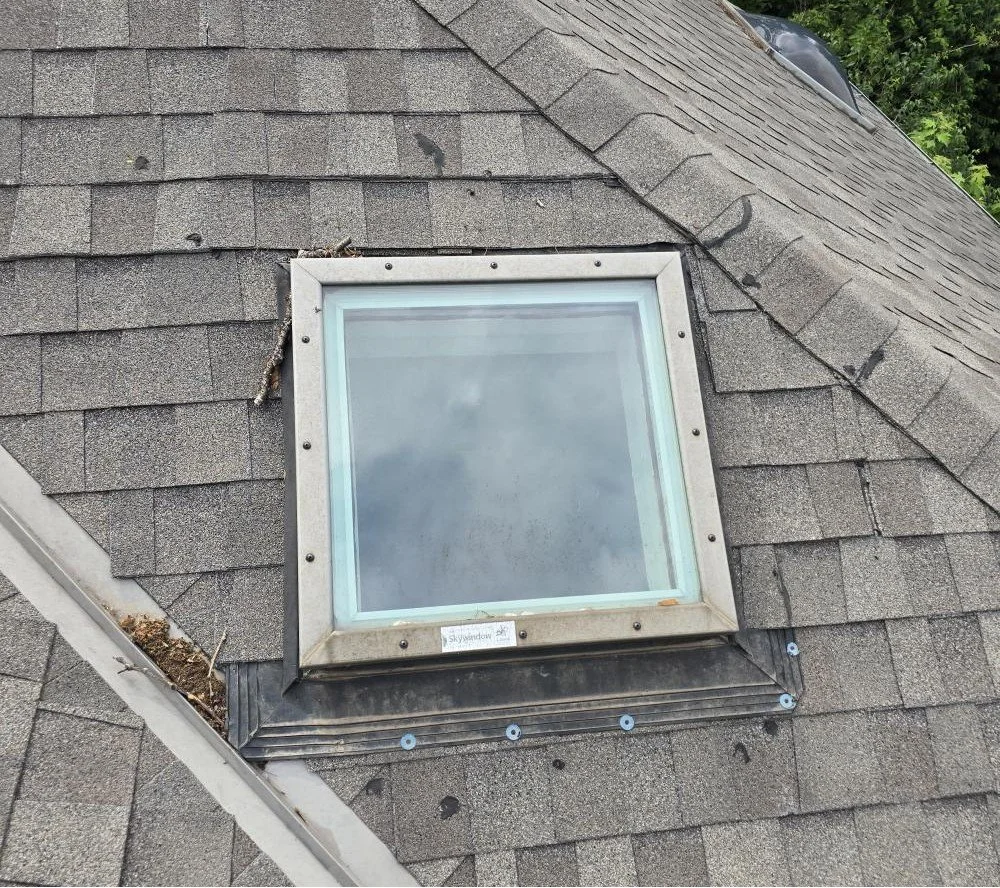
Skylight installed on an asphalt shingle roof. Leaks around skylights are usually caused by failing flashing rather than the skylight glass itself.
Skylights are a nice feature, but they're a penetration in your roof — and every penetration is a potential leak point. In my experience, skylight leaks are one of the more frequently misdiagnosed issues: homeowners assume the skylight itself is cracked, when the actual problem is almost always the flashing around it.
Why they fail: Skylight flashing is similar to chimney flashing in that it needs to flex with the structure over time. Sealants crack, the flashing pulls away, and water infiltrates along the edge of the frame. Condensation can also mimic a leak — if water appears only on very cold nights, that may be what you're dealing with.
What to do: Before assuming you need a new skylight, have a roofer inspect the flashing. A proper re-flash is usually much less expensive than replacing the skylight unit. However, certain skylights incorporate the flashing as a part of the skylight itself, meaning that in some cases the entire unit will need to be replaced. If the skylight itself is cracked, fogged, or more than 20 years old, then replacement makes more sense.
6. Roof-Wall Flashing (Where the Roof Meets a Wall)
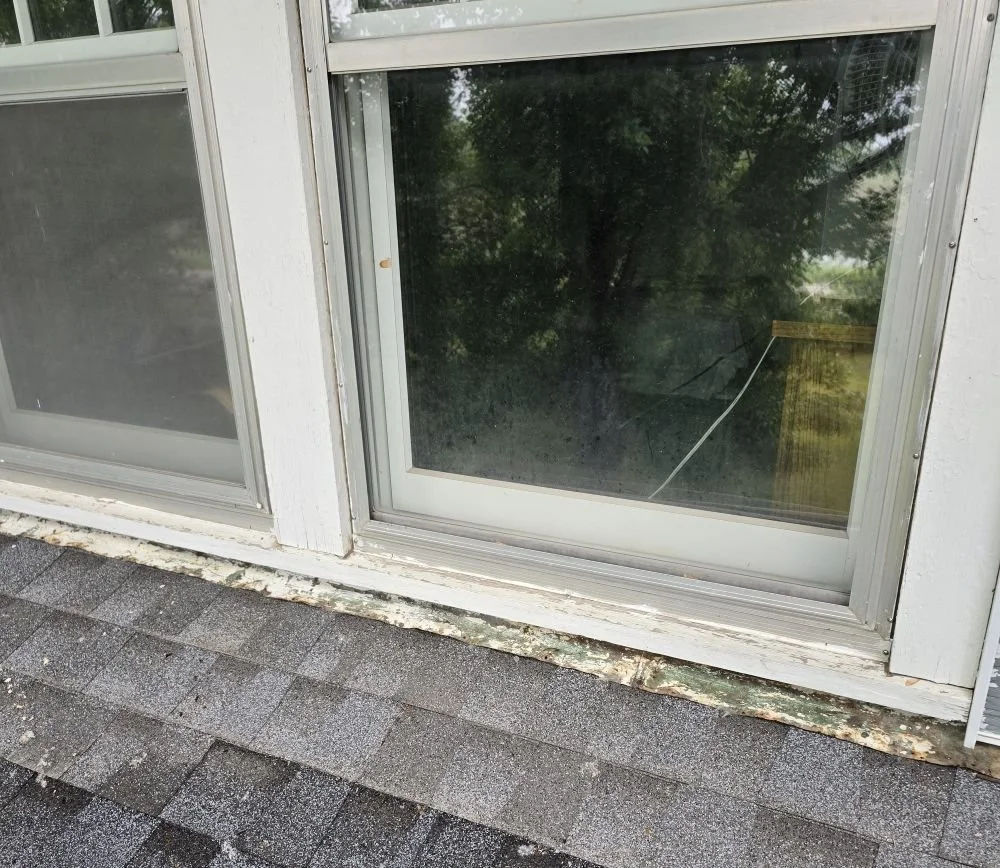
Flashing where the roof meets a vertical wall. Improperly installed or deteriorated flashing in this area can allow water to leak behind the siding and into the roof system.
Anywhere a roof surface runs up against a vertical wall — a dormer, a second-story addition, a garage wall — there's a transition that has to be properly sealed. This is called roof-wall flashing or step flashing, and it's a spot that gets missed or done incorrectly more often than it should be.
Why it fails: I see two common failure modes here. First, the flashing was installed correctly but has corroded or pulled away over time. Second, it was never installed properly to begin with. Some contractors will just run a bead of caulk along a roof-wall transition instead of installing actual step flashing. That holds for a few years, then fails.
What to do: If you have a home with dormers or additions, (extremely common in Ralston, La Vista, and older parts of Omaha and Bellevue) then it’s worth having your roof-wall transitions inspected, especially if the home is 15+ years old. Proper step flashing is often a straightforward repair when caught early.
7. Nail Pops / Exposed Nails
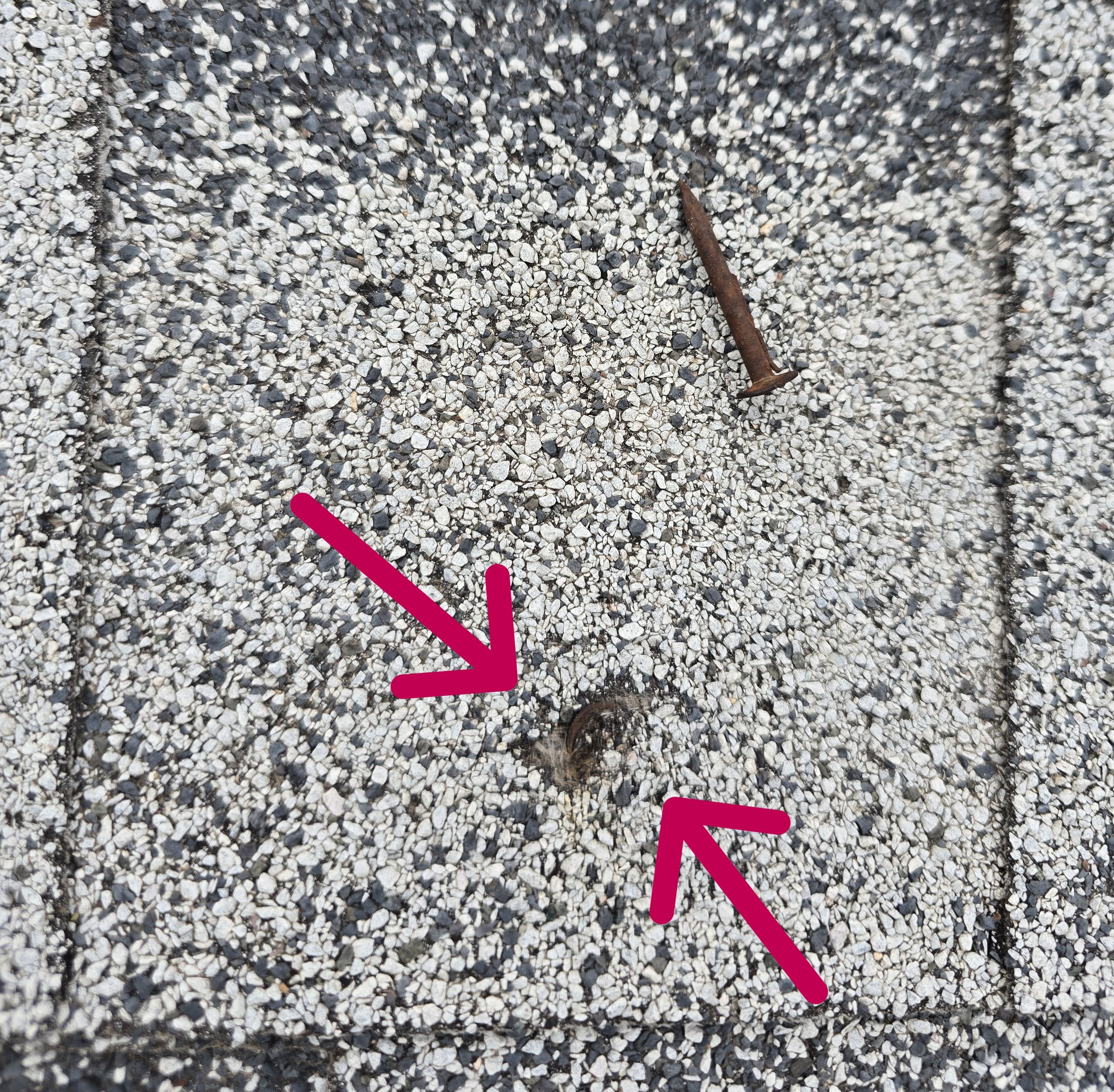
Roofing nail pop pushing through an asphalt shingle. Exposed nails can allow water to penetrate the roof decking and cause small but persistent leaks.
Nail pops are exactly what they sound like: roofing nails that have worked their way up through the shingle surface, leaving an exposed nail head that water can track down into the decking below.
Why it happens: Seasonal expansion and contraction causes the roof decking to move slightly over time. Nails that weren't driven deep enough or were placed slightly off are the first ones to back out. You'll also see this on roofs where installers used too few nails per shingle or when the decking may have been compromised to begin with.
What to do: Nail pops are a minor repair but shouldn't be ignored. A roofer will either re-nail and seal the area, or in some cases replace the affected shingles. If you're seeing multiple nail pops across your roof, that can be a sign of poor original installation — worth documenting if your roof is still under a workmanship warranty.
Not Sure Where Your Leak Is Coming From?
Roof leaks can be tricky to trace. Water has a way of entering at one point and showing up somewhere entirely different on your ceiling. Discovering the source of a leak can make DIY diagnosis frustrating and sometimes misleading.
If you're seeing signs of a leak and aren't sure what you're dealing with, I'm happy to take a look. I serve homeowners throughout the Omaha metro, including Papillion, Ralston, Bellevue, Bennington, Elkhorn, La Vista, and everywhere in between. I'll give you a straight answer about what's going on and what it'll take to fix it.
